


Disclaimer: This publication and its authors are not licensed investment professionals. Nothing posted on this blog should be construed as investment advice. Do your own research.
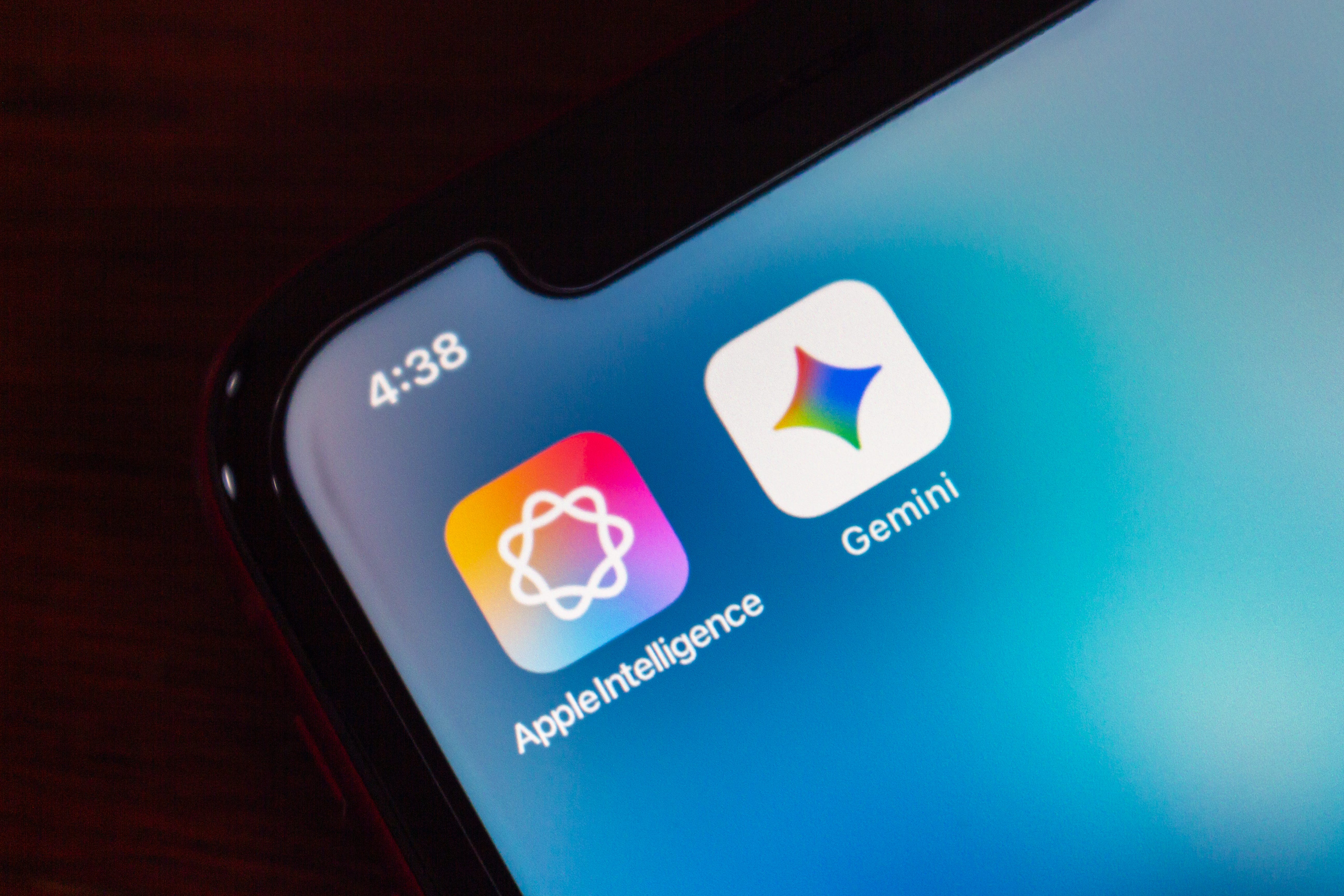
Apple and Google have confirmed a multi-year partnership in which Apple will use Google’s Gemini models to power parts of future versions of Siri and Apple Intelligence. The confirmation came via a rare joint statement from both companies https://blog.google/company-news/inside-google/company-announcements/joint-statement-google-apple/.
The immediate reaction framed this as another checkpoint in the AI race. Google “wins” Apple. Apple “falls behind” hyperscalers. Stocks move accordingly.
That framing is understandable, but it misses a recurring Apple pattern. Apple often uses external technology as a bridge, not an endpoint. This is very important to remember since we can learn from how Apple approached new technologies in the history of the company.
Apple: Using External Models Without Giving Up Control
Apple has never optimized for owning every layer from day one. Historically, Apple has been comfortable relying on partners while it builds internal capability - and then switching once it can control the stack end to end.
The most obvious example is Intel. Apple shipped Macs on Intel CPUs for years before transitioning to Apple Silicon. That move wasn’t rushed. It happened only once Apple could deliver better performance per watt, tighter integration, and more predictable economics with its own M-series chips. The same pattern showed up with Google Maps before Apple Maps, and with GPUs before Apple’s custom graphics pipelines matured.
Seen in that context, Gemini looks like a familiar Apple move. Apple is accessing state-of-the-art reasoning capability now, while continuing to invest in its own foundation models and silicon-level acceleration. Apple was explicit that Gemini will not behave like a generic cloud API bolted onto Siri. Apple Intelligence still runs primarily on-device, with fallback to Apple’s own Private Cloud Compute when needed. Apple and Google emphasized that user data is not broadly shared and that Apple’s privacy guarantees remain intacthttps://observervoice.com/google-offers-privacy-assurance-to-iphone-users-following-gemini-partnership-with-apple-173649/.
From a systems perspective, Apple is borrowing capability without surrendering orchestration. Gemini provides model intelligence today. Apple Silicon, the Neural Engine, Core ML, and the OS decide where inference runs, how often, and under what constraints. If and when Apple’s own models reach sufficient maturity, swapping out the backend becomes a product decision rather than a structural rewrite.
For Apple stock, that matters. Temporary dependency is very different from structural dependency. Apple is not locking itself into a cost structure or vendor relationship it can’t later unwind.
Google: Model Validation and Strategic Positioning
Google still gets something meaningful out of this arrangement, even if it isn’t permanent: validation.
In the joint statement, Apple concluded that Gemini provides “the most capable foundation” for its next generation of AI features https://blog.google/company-news/inside-google/company-announcements/joint-statement-google-apple/. That endorsement carries weight precisely because Apple is selective and historically willing to walk away once it has an internal alternative.
For Google, this is less about locking Apple in and more about proving Gemini is good enough to sit at the core of a massive consumer platform. Even if Apple eventually transitions to its own models, Google benefits from the reputational signal and near-term strategic relevance.
For Alphabet investors, this looks like a positioning win rather than a long-term capture of Apple’s AI economics. Google strengthens its claim to frontier leadership, but without controlling Apple’s destiny.
Microsoft: Still Central, But Not the Default Choice
Microsoft isn’t directly affected by the Gemini deal, but it does lose the assumption that Azure plus OpenAI automatically becomes the foundation for every major consumer assistant.
Apple already integrates ChatGPT for certain Siri queries, but it chose Gemini as the broader foundation layer. That suggests Apple evaluated multiple options and picked what worked best for its current constraints, not what aligned best with a long-term dependency.
This mirrors Apple’s past behavior with Intel. Apple partnered deeply, extracted value, and then moved on once it had a better internal alternative. Microsoft’s strength remains enterprise AI and developer ecosystems, but this deal reinforces that Apple will always keep optionality.
Amazon: Indirect Exposure and Long-Term Implications
Amazon sits slightly outside this specific partnership, but the broader implication still applies.
Always-on consumer AI struggles with cloud-first economics. Apple’s decision to keep inference mostly on-device while temporarily sourcing model capability externally reinforces that lesson. It’s a reminder that centralized inference scales poorly when AI becomes ambient rather than occasional.
For Amazon, this echoes some of the challenges Alexa faced. It also hints that future consumer AI systems may blend local execution with selective cloud augmentation, rather than relying entirely on hyperscaler infrastructure.
OpenAI: Important, but Potentially Transitional
OpenAI remains part of Apple’s AI stack. Apple continues to use ChatGPT for certain requests that require broad world knowledge or creative generationhttps://wandb.ai/byyoung3/ml-news/reports/Apple-turns-to-Google-for-AI--VmlldzoxNTYxNDk2Nw.
But just like Gemini, OpenAI’s role looks more like a component than a permanent foundation. Apple’s architecture already supports multiple models, and its tooling is designed to swap backends as capabilities evolve.
If Apple follows its historical playbook, both Gemini and OpenAI could eventually be replaced; Not abruptly, but once Apple’s internal models are good enough for its specific use cases.
How This Fits Apple’s Broader AI Architecture
This partnership fits cleanly into Apple’s long-term approach: control the stack, even if you don’t own every piece yet.
Apple isn’t trying to outspend hyperscalers on centralized compute. It’s trying to avoid inheriting a variable cost structure that grows with every user interaction. By pushing inference onto devices it already sells, Apple turns AI execution into a fixed, amortized cost tied to hardware cycles.
External models like Gemini fill the gap while Apple’s own foundation models mature. Once they do, Apple can internalize more of the stack without retraining users or rethinking the product.
This is the same transition Apple executed with CPUs, GPUs, and mapping infrastructure. The difference is that AI is more visible, but the strategy is the same.
Implications for Apple, Hyperscalers, and AI Platforms
This deal doesn’t redraw the AI landscape overnight, but it clarifies incentives.
Apple buys time and capability without committing long term. Google gains validation and near-term relevance. Microsoft and Amazon see confirmation that platform control is never guaranteed. OpenAI remains important, but likely not permanent.
More broadly, this reinforces that AI is becoming infrastructure. As that happens, temporary partnerships, modular architectures, and cost containment matter more than public dominance narratives.
What This Means for the Stocks Involved
There’s no single winner here.
Apple reduces risk around Siri while preserving optionality. Google gains credibility. The hyperscalers are reminded that consumer AI is expensive and that Apple will not accept open-ended cost exposure.
For investors, the key insight is that Apple is behaving exactly as it has before: rely on partners when necessary, build internally in parallel, and switch once control and economics improve.
Closing Perspective
Apple’s decision to use Gemini for Siri looks less surprising when you view it through the company’s own history.
Apple has repeatedly used external technology as a bridge rather than a destination. Intel CPUs, Google Maps, even early GPUs followed the same pattern. Gemini fits neatly into that lineage.
Apple isn’t conceding the AI stack. It’s buying time while keeping control of where costs, latency, and privacy live. If history is a guide, this partnership may last only as long as it takes Apple to ship something better for its own constraints.
That’s not an exciting story. But in technology and investing, those are often the stories that matter.
If you want to learn more about Apple’s approach to AI, feel free to check out my article from a few weeks ago: https://substack.com/@techfundamentals/p-183697737